



‘Decarbonisation Zone’ in Galway City aims for car journeys to be halved
Published:
-

-
Author: Stephen Corrigan
~ 4 minutes read
From this week's Galway City Tribune
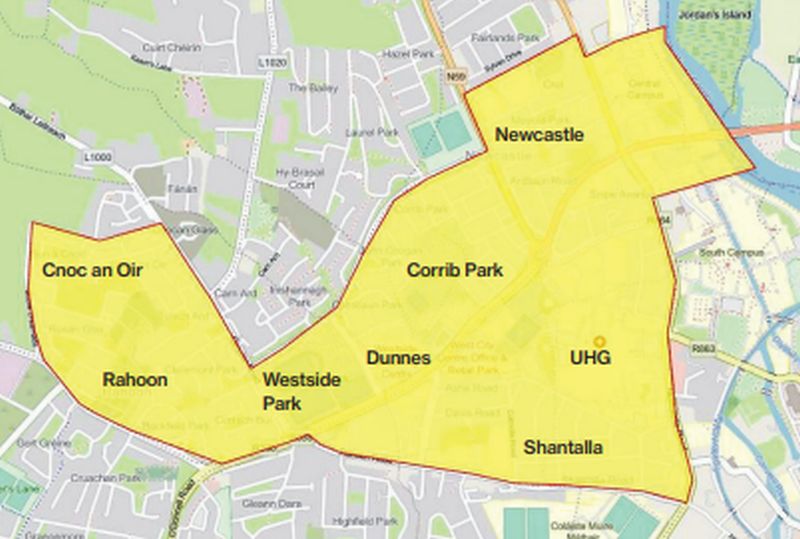

Housing retrofits, a 50% reduction in car journeys, zero-carbon public transport and a widespread shift to renewable energy are among targets for a ‘Decarbonisation Zone’ (DZ) to be implemented on the western side of the city.
The zone, which is to encompass parts of Newcastle, Rahoon, Shantalla and Westside, will seek to set out a “feasible pathway to 51% reduction in greenhouse gas emissions over the decade” according to details of the strategy unveiled this week in the City Council’s Draft Climate Action Plan (CAP).
The area, they state, will serve as a pilot to experiment with new technologies, policies and strategies for decarbonisation and “provide a controlled environment” for researchers and policymakers to refine their work before rolling it out to other areas of the city.
Unlike the city as a whole where residential emissions are the greatest polluter – primarily electricity and heat – the commercial and industrial sectors account for the largest amount of greenhouse cases in the DZ which includes the University of Galway, University Hospital Galway and a number of private industries.
These emissions are largely derived from operations and energy consumption, states the CAP, and they are among the reductions targeted over the seven-year strategy.
One goal of the plan is to “empower the local community to engage with climate action through education, support and ongoing collaboration”.
The CAP states that the DZ is designated ‘marginally below average’ to ‘disadvantaged’ in accordance with the Pobal deprivation guides.
“This has been taken into consideration throughout the preparation of this Decarbonisation Zone Plan, whereby, a just transition to a decarbonised future has been central to the identification of actions.”
This, it is stated, will ensure that the burden of the transition is “not disproportionately felt by some groups”.
Among the actions proposed is to retrofit of 60% of houses in the zone (988 units) and 50% of apartments (444 units) within seven years.
The City Council is to retrofit 17% (137 units) of its houses in the zone by 2030 and 15% (32 units) of its apartments. Heat pumps are to be installed in 37% (237 units) of its stock with a low BER rating.
Solar panels are to be installed on 68% of ‘suitable homes’ within six years, while there is an objective to deliver an education and training programme on retrofitting, energy efficiency and heat pumps in conjunction with the educational institutes within one to two years.
85% of all social housing in the area is to be fitted with solar power systems.
By 2030, the CAP seeks to replace 60% of buses (15) and taxis (22) with zero-carbon fuel alternatives, and 40% of cars in the area, amounting to just under 1,500 vehicles.
The CAP commits to implementing walking, cycling and public transport infrastructure in line with the Galway Transport Strategy (GTS) within five years, and reduce by 50% the number of kilometres travelled in vehicles.
On the industrial and commercial side of things, a 70% reduction in electricity usage by large consumers is targeted within seven years, while 60% of the demand is to be met by on-site renewable energy generation.
Within five years, 20% of gas demand is to be met by renewable biomethane.
All municipal buildings, which include libraries, community centres and some sporting facilities, are to be retrofitted, have heat pumps installed and solar panels fitted.
The Council has committed to collaborating with the university, schools, and community groups to reduce waste and to encourage urban food growth.
A policy to increase permeable areas, facilitating easier active travel, with public real enhancement green space and planting is to be rolled out over four to five years.
“The DZ will act as an exemplar area for the city, to test a high decarbonisation ambition with potential to scale this to the city. Learnings from the zone will become a useful reference for further plan making and will be delivered in conjunction with the Energy Masterplan for the city.
“The community, industries and businesses will be key partners in creating a low carbon economy which will be resilient for the future. As a collective community, we will all have to act at pace to implement this plan into action,” states the CAP.
More like this:

Camogie Club launches third South Galway Operation Transformation Programme
Last year over 400 determined participants made it their healthy start to a New Year – and this y...

TG4 airs special evening of poetry and music dedicated to departing President
A fitting tribute to a President who devoted so much of his life to the promotion of arts and cul...
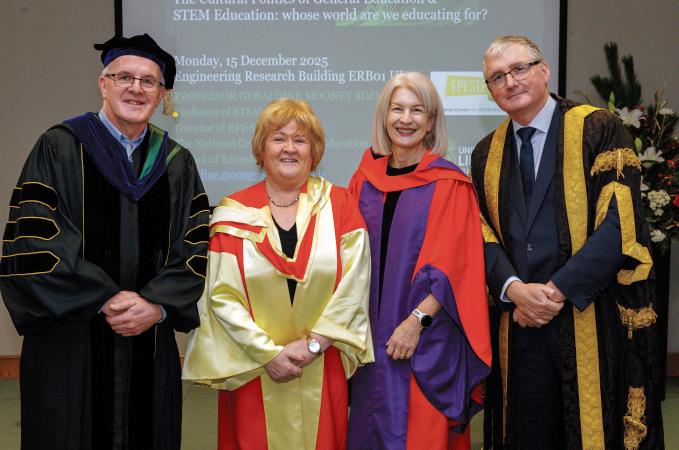
Former Jes teacher-turned-Professor delivers inaugural lecture to the University of Limerick
A former teacher in the Jes and lifelong advocate for STEM Education reflected on a career path t...

Council presses Coillte on dangerous roadside trees
By Avril Horan CALLS have been made for Coillte to carry out a full investigation into dangero...

Golf legends among Galway quartet of new entries in Dictionary of Irish Biography
A disparate quartet of famous Galwegians – two golfers, a geneticist and leading academic – are a...
Report exposes cyber-attack risk to Galway City Council
A ‘top secret’ report contains information that could expose Galway City Council to cyber-attacks...

Galway’s food scene ‘must be protected’
THE authenticity and independence of Galway’s eateries and restaurants must be protected to ensur...

Three-time All-Ireland senior hurling winner joins elite club with Hall of Fame award
TWO World champions will be honoured at the 2025 Medtronic Galway Sports Stars awards presentatio...
Focus on family at Galway City New Year Countdown
Galway City will have an early evening family-focused countdown for New Year’s Eve from 6pm to 9p...
Sign Up To get Weekly Sports UPDATES
