

Survey reveals that Corrib fish is now extinct

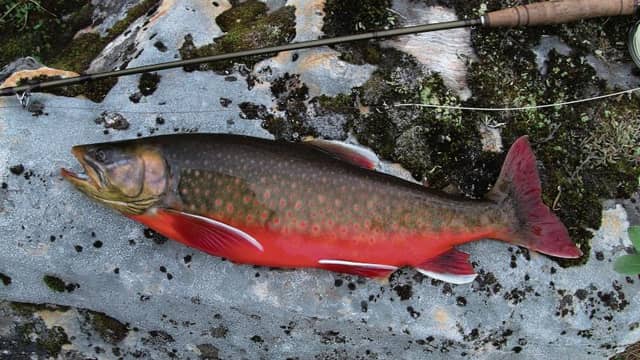

Arctic char, a fresh water fish, has become extinct on Lough Corrib, a new survey reveals.
The species of fish, which is related to salmon and trout, is no longer present at the Galway lake, according to Inland Fisheries Ireland (IFI).
Char historically used to be prevalent in Lough Corrib but it hasn’t been detected there in the latest IFI survey, or in the previous one conducted four years ago.
The deterioration in water quality in the Corrib could be a factor, according to the report, Sampling Fish for the Water Framework Directive, which outlines the current ecological status of fish stocks in each water body.
The report said although historically present at Lough Corrib no char specimens were captured there or at four other Irish lakes (Lough Allua, Lough Easky, Lough Egish, Lough Owel) in 2011 or 2014.
This suggests, “the local extinction of the species in these lakes”, the report said.
The report added: “A number of char populations have become extinct over the last 30 years and this has been attributed mainly to deterioration in water quality or acidification. The absence of native species such as trout, salmon and char within specific catchments is related to various factors, including deterioration in water quality, the presence of impoundments preventing fish passage, drainage and modification of river morphology, habitat deterioration and translocation and competition from non-native species.”
The report, published last week, was compiled after 26 lakes across Ireland were surveyed between June and October 2014.
Although Arctic char was no longer present, there was a rich diversity of fish species recorded in Lough Corrib. “Fish species richness (excluding hybrids) ranged from three species on Glenbeg Lough, Cork, Kiltooris Lough, Donegal, Lough Barra, Donegal and Lough Easky, Sligo to a maximum of ten species on Lower Lough Corrib, Galway,” it noted.
This included five native species and five non-native species on Lower Lough Corrib. Meanwhile, there were eight species present on Lough Corrib Upper, including four natives and four non-natives.
Juvenile salmon were recorded in nine lakes, including Lough Corrib Upper and adult salmon was recorded at eight lakes, including Lough Corrib Upper and Lough Corrib Lower.
The highest abundance and the highest biomass of eels amongst all lakes surveyed during 2014 were recorded in Upper Lough Corrib, according to the report.
Nationally, of the 26 lakes surveyed, some 19 fish species and two types of hybrids were identified. A total of 12, 205 fish were recorded.
“Eel was the most common fish species recorded (96 per cent of lakes surveyed) followed by brown trout (81 per cent), perch (65 per cent), roach (42 per cent) and pike (38 per cent). In general, salmon, brown trout, sea trout and Arctic char were the dominant species in the north, west and south-west of the country,” it said.
Dr. Cathal Gallagher, IFI head of research and development, said: “This work provides information on the ecological status of fish species present in selected water bodies as well as information on their abundance, growth and population demographics for fishery managers, legislators, angling clubs, fishery owners and other interested parties”.
Dr Ciaran Byrne, CEO of IFI, said: “The information captured in the report gives us an increased understanding of the dynamics and changes in our fish populations at sample locations throughout Ireland.”